13 July 2026 • Janneke Mol
Why 125 engaged neighbours can sometimes be more valuable than 3,500 followers.


Success in project communication is often measured by reach; the more followers, the better. But for the Oosterweelverbinding in Antwerp, which has been using the WerfApp (the Belgian version of Publiq), it is often the much smaller groups of neighbours following individual subprojects that matter most.
Of course, having thousands of followers across the wider project is important. But for Anke D'Halleweyn, Team Lead Project Communication at Lantis, those smaller audiences can be just as meaningful. "Those 125 followers of a local cycling project can sometimes be more valuable to us than the 3,500 followers of the Oosterweelverbinding," she explains. "With those projects, we are literally working in people's streets. That means you know you are reaching the people who are directly affected by the works."
By allowing residents to receive updates that are only relevant to their own neighbourhood, the WerfApp has earned a permanent place within Lantis' communication strategy. This is the story of Anke D'Halleweyn and Project Communicator Margot Van den Bergen, and how they keep local communities engaged throughout one of Belgium's largest infrastructure projects.
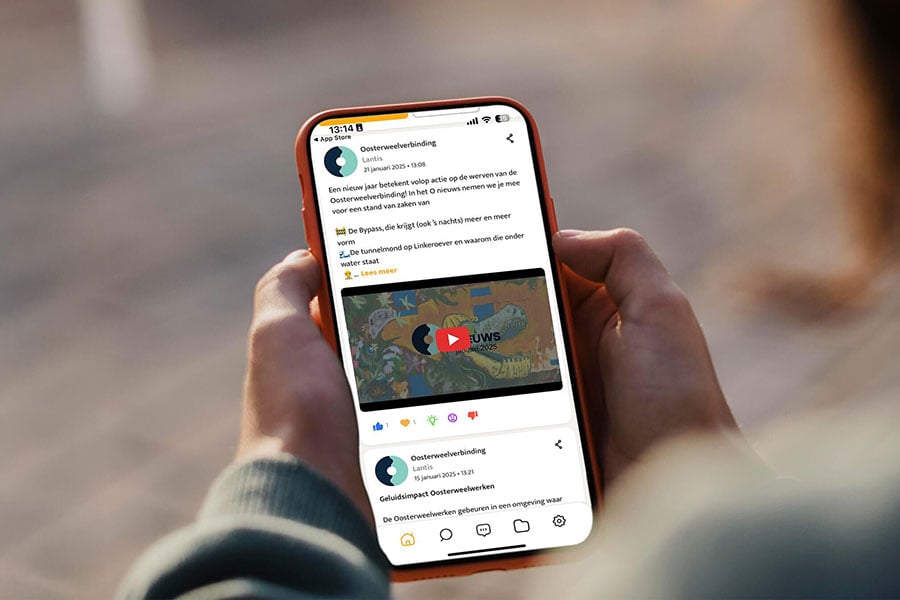
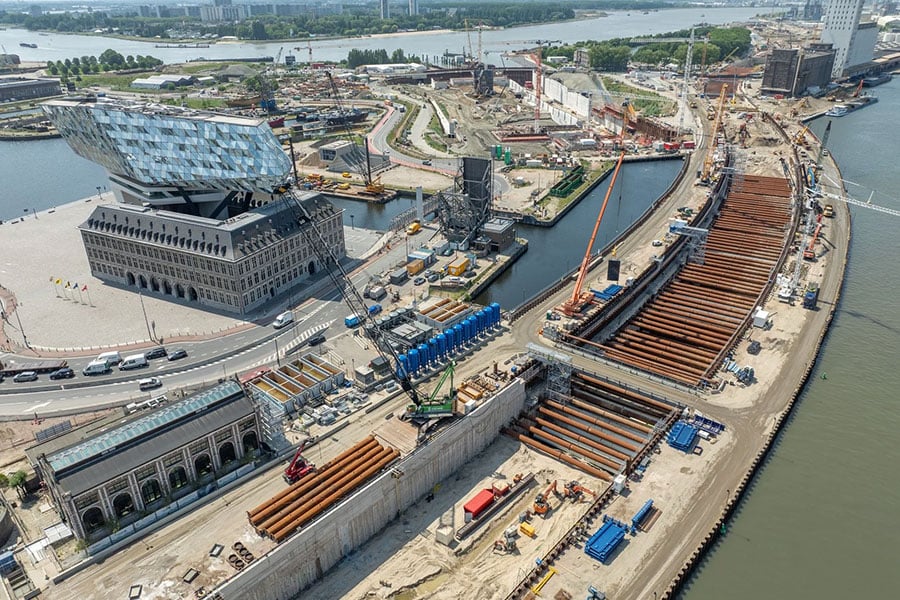
The Oosterweelverbinding is one of Belgium's largest infrastructure projects, transforming the ring road around Antwerp. Lantis describes its ambition in the WerfApp as creating ‘a new city: a greener city with parks within walking distance for sport and recreation, a healthier city with green covers that provide long-awaited peace and space, and a more accessible city with safe and efficient roads that support the Flemish economy.’
The works are spread across multiple locations and affect residents, commuters, businesses, and visitors alike. While the main project attracts thousands of followers, many individual subprojects are only relevant to a relatively small group of nearby residents.
To communicate effectively with all these audiences, Lantis relies on a broad mix of communication channels, including social media, newsletters, resident letters, press communications, information evenings, and project websites.
The challenge is deciding how to keep residents living next to a construction site informed without overwhelming the rest of the region with information that is not relevant to them. For that type of local communication, the WerfApp proved to be a valuable addition.
Communication around the Oosterweelverbinding takes place on two levels.
Communicating with the wider region
At one level, Lantis communicates about the project as a whole. Through social media, newsletters, project websites and press communications, residents, commuters, and other stakeholders receive updates about major milestones, overall progress, and the wider impact on the region. "Not everyone needs the same information," says Anke. "Some people want to follow the full story of the Oosterweelverbinding, while others simply want to know what is happening in their street tomorrow."
From regional communication to street level
The second group is primarily interested in what the works mean for their own neighbourhood. When will work take place? Will there be disruption? Will access to their street change? And for how long?
This is where Lantis uses the WerfApp. The platform allows residents to follow individual subprojects, ensuring they only receive updates that are relevant to their own area instead of being flooded with information about other parts of the Oosterweelverbinding.
The right mix of channels
According to Anke and Margot, both levels of communication complement one another. Broad communication helps people understand the bigger picture behind the Oosterweelverbinding, while local communication keeps residents informed about what is happening directly around them.
"On Facebook, Instagram, and LinkedIn we communicate about the project as a whole," Margot explains. "We mainly use the WerfApp for local updates and communication that is relevant to people living close to a construction site."
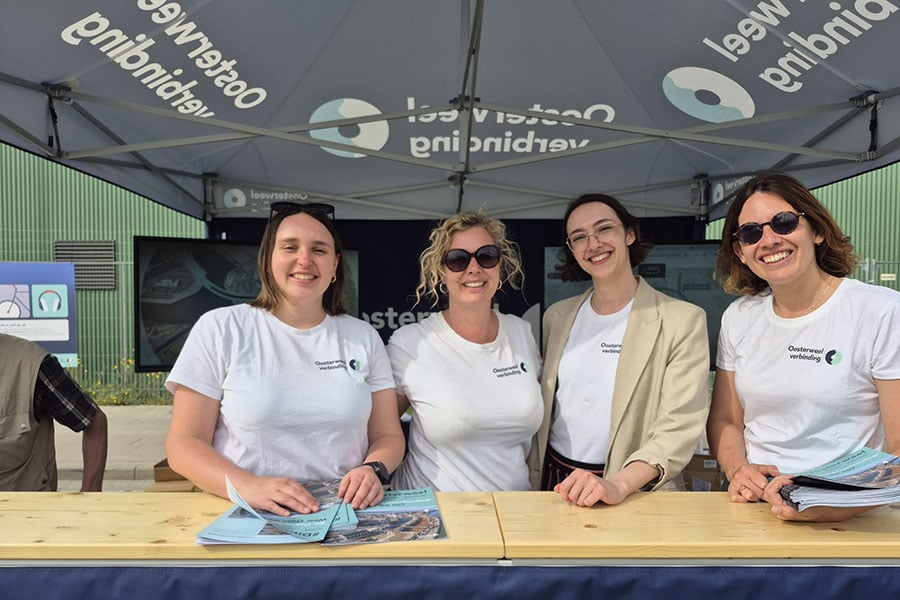
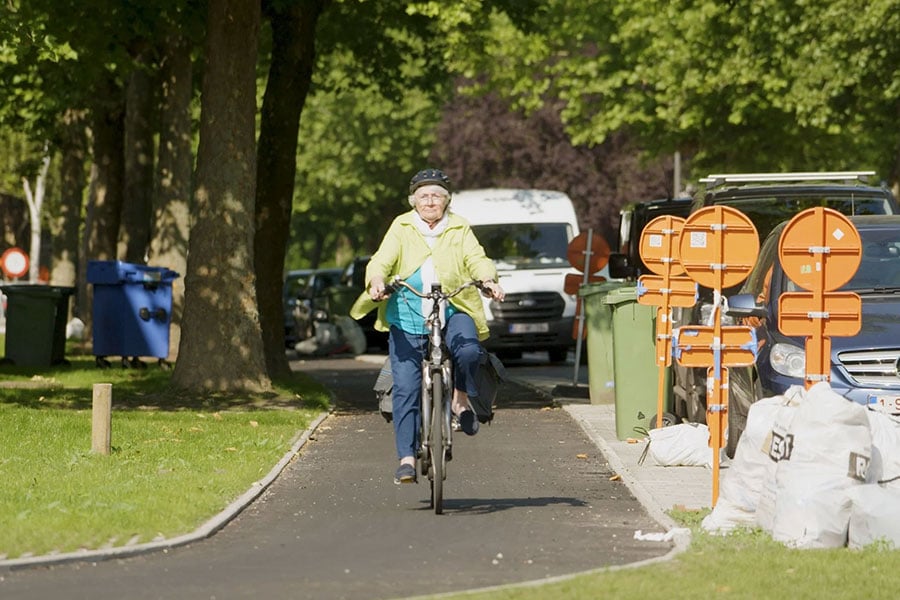
One of the biggest advantages of this approach is that communication becomes more targeted. A temporary road closure, overnight works or changes to local accessibility may be essential information for nearby residents, while being irrelevant to people elsewhere in Antwerp.
The combination of communication channels allows Lantis to tailor information to specific audiences. Residents choose which subprojects they want to follow in the WerfApp and only receive updates that matter to them. This prevents unnecessary information overload and ensures that updates reach the people who actually need them.
Although the WerfApp plays an important role, Anke and Margot do not see it as a replacement for their existing communication channels. Resident letters, information evenings, social media, and newsletters all continue to serve an important purpose.
By combining the WerfApp with these existing channels, Lantis can communicate more effectively. General project information remains available through its established communication channels, while residents directly affected by individual subprojects receive timely, location-specific updates through the app.
Every communication channel has its own role and audience. "We would never rely on the WerfApp alone," says Anke. "It complements our communication mix. Different messages require different channels."
Since introducing the WerfApp in early 2025, Lantis has seen the platform continue to grow. Major projects attract thousands of followers, while smaller projects successfully reach the local communities they are intended for. For Lantis, however, success is not measured by numbers alone. The real question is whether the right people are receiving the right information.
That is often easier to achieve with a local project followed by 125 residents than with a regional project followed by several thousand people. For Anke and Margot, that is where the real strength of targeted communication lies. "For us, it is not about reaching as many people as possible," says Anke. "It is about making sure that the people who are directly affected receive the information they need."
Reach out to us
Concepteurs BVDownload our app


2026 Publiq. All right reserved.


