27 April 2026 • Janneke Mol
Paul Frankenhuizen speaks about how an early interest in community engagement became the incentive for Publiq.


When Paul Frankenhuizen talks about consultation and communication, he does not start with tools or technology. He starts with trust, and yet he is one of the founders of Publiq, an application that allows communication specialists to engage the public.
Years of working in the field of Infrastructure and Communication have taught him that distrust does not usually emerge overnight. It grows slowly, often because people feel excluded, surprised or informed too late. “Frustration does not always come from what happens,” Paul says, “but from when and how people hear about it.” Years later, that insight still lies at the heart of Publiq.
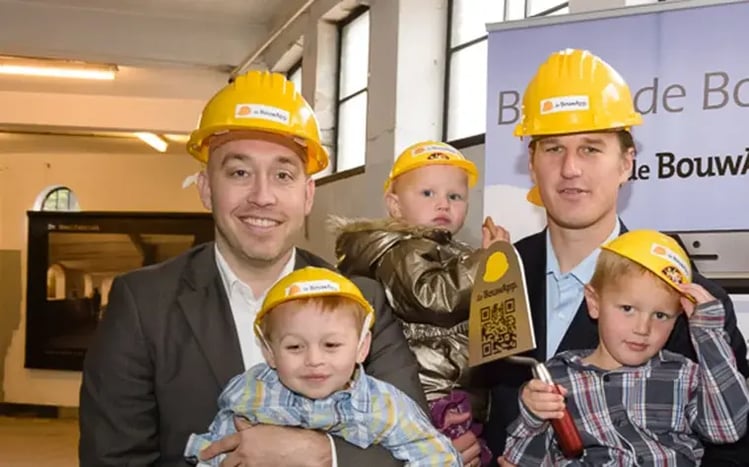
Paul studied communication management and was introduced to the construction industry during his studies. For his thesis, he focused on community engagement, at a time when the profession itself had not yet fully taken shape. After graduating, he worked as a consultant and manager at a training institute within the construction sector. It was there that he began to notice how the role of communication was gradually becoming more important.
As a training advisor, he spent a great deal of time on site, both in site cabins and out in the field. “I even managed to damage my car on a frozen survey peg,” he recalls. “I was on construction sites so often that my car needed washing almost every week.”
During that time, he also started to see a recurring pattern. Communication with local residents was often spread across different channels, reactive and frequently too late. Information was shared through letters, meetings and emails, while complaints came in through entirely different channels.
“We kept responding to issues after they had already escalated,” he says. “There was no single place for all communication, both outgoing and incoming. Most of what we communicated was negative, not on purpose, but because it only started once problems became visible.”
What he encountered on site was not an isolated issue. It reflected a broader pattern in how organisations communicate throughout the lifecycle of a project. From early announcements and planning, through execution, and into the period after delivery, communication was often treated as a series of separate moments rather than a continuous process.
That realisation formed the basis for the idea behind Publiq. Communication, in his view, needed to be structured differently. Not as something that starts when problems arise, but as a continuous process that runs alongside the project itself.
It was during this period that he started pitching that idea to contractors. Many were hesitant and saw communication as additional work. Others, more progressive companies, began to recognise that it could reduce issues and improve the overall process.
For Paul, transparency is a prerequisite for trust. Without it, consultation becomes a formality and engagement feels superficial. “People do not need to agree with everything,” he explains, “but they do need to understand what is happening, why decisions are made, and what will happen next.”
This is where many processes fall short. Information is often shared selectively, only when required, and not always in a way that allows people to follow the bigger picture. As a result, residents feel like they are constantly catching up, rather than being genuinely included.
Paul believes transparency should be embedded structurally, not improvised under pressure. That means creating systems that make it easy to share information consistently, even when there is nothing urgent to report.
One of the core ideas behind Publiq is that communication should not reset at every new phase of a project. In practice, that is exactly what often happens. A new contractor arrives, a new communication team takes over, or a project moves from planning to execution. Each time, the narrative starts again from scratch. “What people experience is a series of announcements,” Paul says. “Not a story they can actually follow.”
Publiq was designed to bridge those phases. To provide continuity from the very first announcement through to long-term engagement. That continuity is essential for trust, because it allows stakeholders to see how decisions evolve over time, rather than encountering them as isolated facts.
That long-term perspective is what distinguishes meaningful engagement from one-off engagement. It requires organisations to commit to openness even when conversations are uncomfortable, and to keep communicating when there is no immediate payoff.
“Do not only inform about the negative aspects, but also show the positives that happened and will happen,” he says. Paul sees this as one of the most important aspects of communication: “people see only fragments of what is happening when they walk past a site. They often miss the highlight and the beauty of a project. Many things can go wrong, but there are many more things that go right. By showing those, you create support.”
This is also why Publiq deliberately avoids becoming a generic social platform. Paul is wary of comment sections that reward volume over substance, or algorithms that amplify conflict. “We are not interested in noise or increasing push-back,” he explains. “We are interested in dialogue that actually helps a project move forward.”

Although Publiq’s background is in construction and infrastructure, Paul is clear that the underlying principles apply far beyond that sector. Any project that affects people over time, from urban development to policy implementation, faces similar challenges.
The idea is simple. To create a way of communicating that respects people’s intelligence, acknowledges their stake in projects, and treats trust as something that must be earned continuously.
If there is one thing Paul hopes people take away, it is that transparency is not about telling people everything at once. It is about telling them enough, at the right moment, and honestly, so trust has a chance to grow.

Experienced copywriter writing about Stakeholder Engagement and Consultation.
Reach out to us
Concepteurs BVDownload our app


2026 Publiq. All right reserved.


